What is Business Process Management (BPM)?
Business Process Management, a Business Process Management approach, these phrases and the acronym BPM, are used all the time in business, but what do they actually mean?
This article aims to explain - in plain English.
If you Google, “What is Business Process Management?” a variety of definitions are returned; to my mind two of the most useful are:
“Business process management (BPM) is a field in operations management that focuses on improving corporate performance by managing and optimising a company's business processes.” Theodore Panagacos (25 September 2012). The Ultimate Guide to Business Process Management: Everything You Need to Know and How to Apply It to Your Organization.
and
"The discipline of managing processes (rather than tasks) as the means for improving business performance outcomes and operational agility. Processes span organisational boundaries, linking together people, information flows, systems and other assets to create and deliver value to customers and constituents." Gartner. "Business process management (BPM)".
So that explains it all; except not in plain English.
So let’s break it down.
What is a Business?
Used in the term Business Process Management, ‘business’ in fact largely means organisation.
This could be a charity, a university, a mutual society, a college of further education, a council…or in fact a standard for-profit business.
Any organised group of people with a particular purpose, but with the expectation that the organisation is set up to add value in some way.
What is a Process?
The word ‘process’ is defined by ISO (the International Organisation for Standardisation) as "a set of interrelated or interacting activities that transforms inputs into outputs."
Perhaps a simpler way of putting this is to say, a process is a series of actions or steps taken in order to achieve a particular end. Certainly in ISO’s definition, ’transformation’ is the key word.
Processes are most easily recognisable in manufacturing, where it is easy to see raw materials (inputs) being transformed into goods (outputs). For example metal (the input) being transformed into cars (the output).
However anything we do that produces something, is a process. Today I have been interviewing candidates, so transforming my time into the appointment of a new employee (I hope!).
Generally inputs to a process are outputs of other processes, the exception being at the very beginning of the process - in the example above, the metal – or the very end - in the example above, the cars. In between there are multiple inter-related processes.
What is Management?
‘Management’ means dealing with or controlling things or people. It is an activity, something that is done.
The Whole is More Than the Sum of the Parts
Putting these three word together into the term Business Process Management also adds into the meaning an end objective: improvement

Business Process Management in Layman’s Terms
So, Business Process Management is something that is done to control the actions or steps taken in the course of producing something (either a product or a service), in order to improve the value added by doing those actions.
A pretty broad term therefore and herein lies the difficulty in understanding what it means. It is ‘something that is done’, a practice, an approach, a discipline perhaps. It is not a prescribed way of doing thing.
Two Key Elements of a BPM Approach
To take a BPM approach however, two key elements must be present:
- The ‘things that are done’ must deliver improvement to the business or organisation where they are being done.
- The approach considers the multiple inter-related processes of an organisation and as such takes a holistic look at its business activities. This is a key difference between BPM and other approaches where individual business functions are improved – by automation perhaps.
Examining each of these a bit more:
Delivering Improvement
Improvement must be the key objective and deliverable of any BPM project. Achieving improvement is the sole reason for undertaking Business Process Management project. However, that improvement can take many forms. For example:
- Improved access to information about how to do a process
- Consistent delivery of processes throughout the organisation
- Adherence to processes by those responsible for doing them
- More efficient processes (with duplicated or unnecessary steps removed)
- A better quality end product (good or service)
- A less risky processes
- Better customer service
- There are many more…
To read about some of these please read the following:
How to Reduce Accidents in the Workplace: Taking a BPM Approach for HSE Management
How to Improve the Quality of your University Students’ Experience: Using a BPM Approach
How to Transfer Business Knowledge from Key Employees Before they Leave
How Business Process Management (BPM) can Break Down the Silos in your Organisation
A Holistic Look at Business Activities
Many of the improvements to be gained in a business are achieved by looking at the handover points between functions. This is where the biggest delays and inefficiencies occur. For example one department may be producing something for another department, but not quite in the format that they need it, or within the optimal time frame. Often once the interconnection between processes is understood, small adjustments can deliver big improvement.
How to do Business Process Management
Well here is the thing, there is no one way.
However, given that BPM is about process improvement, it is a requirement that the start point is documenting your processes, so that you understand what they are, how they interrelated, who is responsible for doing what …
Process Mapping
Documenting your processes can be done in many ways, but the most common approach is called Process Mapping.
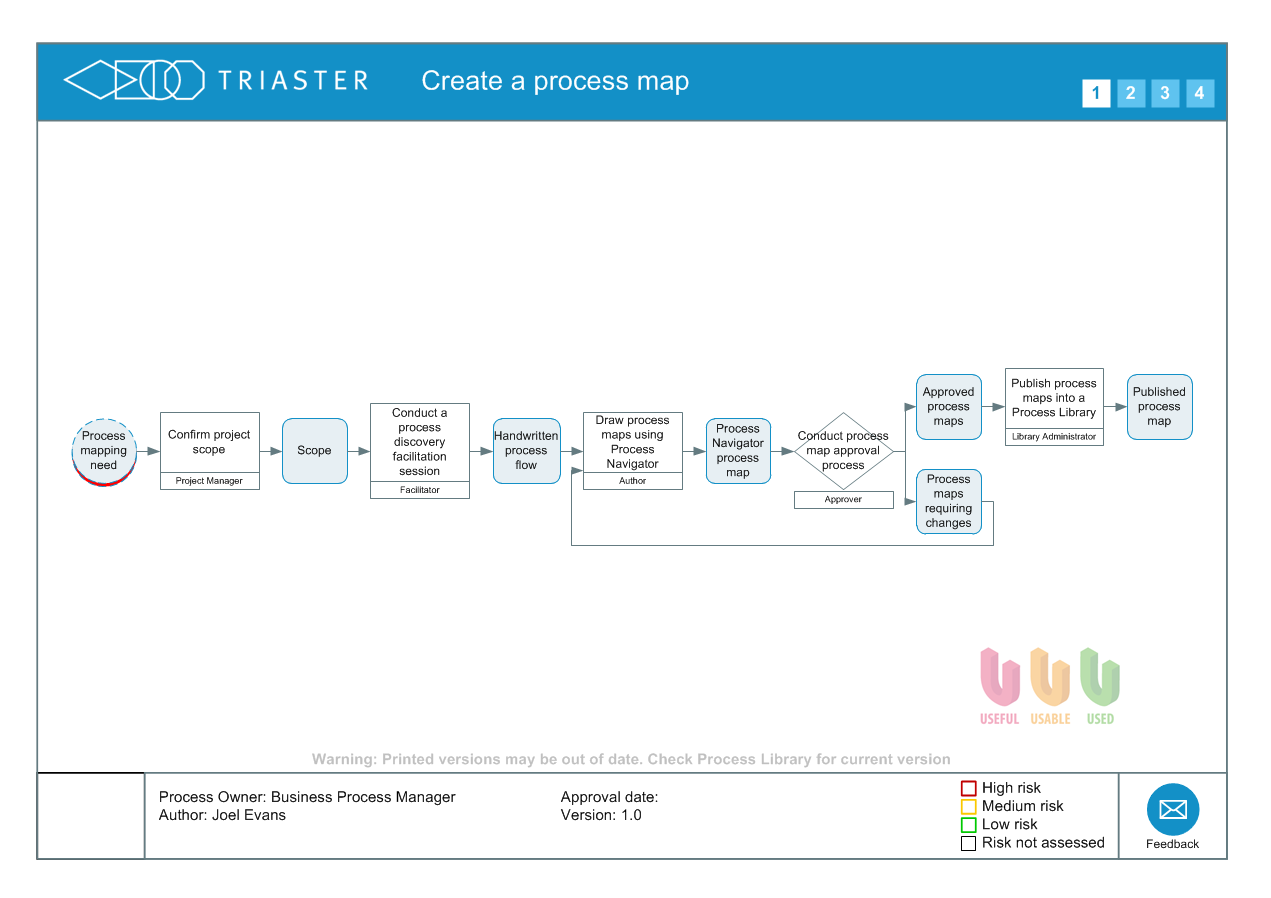
Process mapping is an exercise to identify all the steps and decisions in a process in diagrammatic form which:
- Describes the flow of materials, information and documents
- Shows the various tasks contained within the process
- Clearly shows that the tasks transform inputs into outputs
- Indicates the decisions that need to be made along the chain
- Demonstrates the essential inter-relationships and interdependence between the process steps; and reminds us that the strength of a chain depends upon its weakest link
For more on process mapping please read the following articles:
Six Major Benefits of Process Mapping
There are multiple process mapping software tools enable this. It is not essential to use a software tool, but doing so generally makes documenting processes a great deal easier.
BPM Software Systems
With your processes documented they can be controlled and improved. There are many, many ways to approach this and many software systems to support you.
Which one to choose is a whole other question!
Triaster BPM Platform
Triaster is a Business Process Management platform. We know it won’t suit everyone’s needs, but if you are interested in learning what we offer please join us for our next free webinar.
Related articles: